Installation guide
Gate Installation
Plan a residential gate around the space it needs, the people who use it, and the work your property will require.
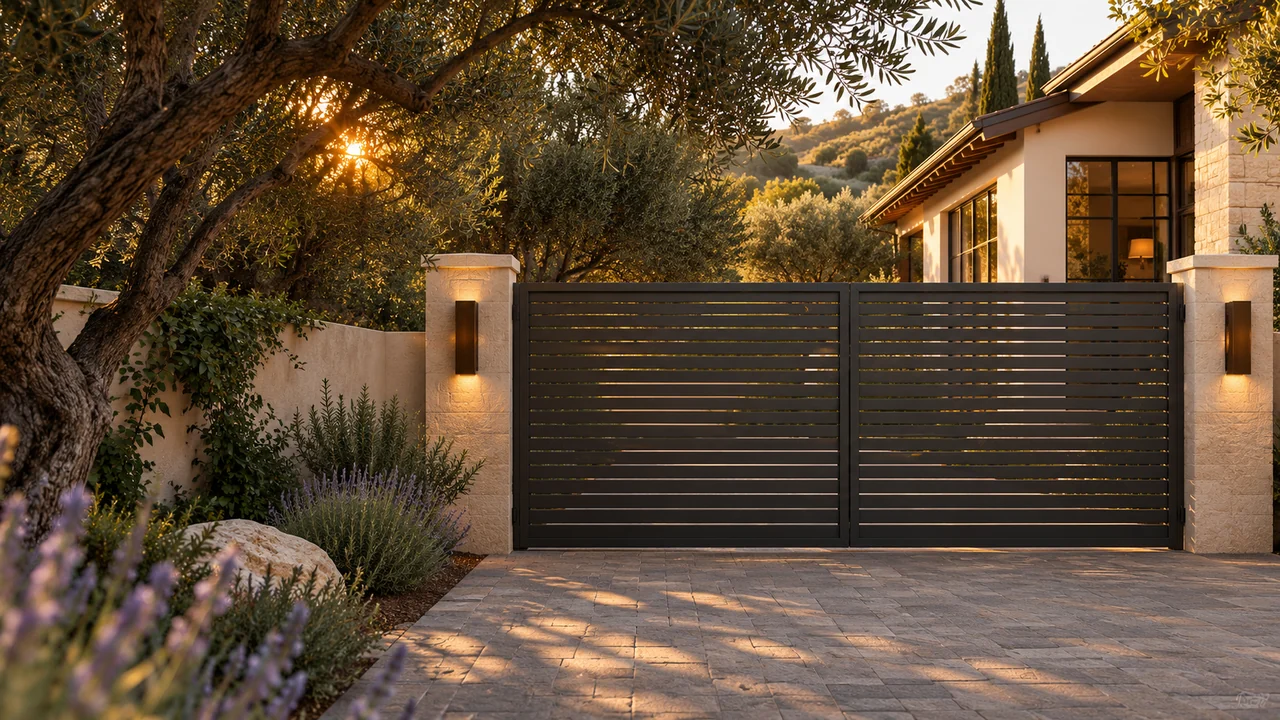
Start with who needs to get through
For a driveway, measure the clear width a vehicle needs between finished posts. Consider delivery vehicles, parking and the space to wait off the street. For a side yard, check the usable walking width with the gate open and whether bins, bikes or equipment need to pass. If both routes matter, plan a separate pedestrian opening.
What the site visit should cover
Ask the installer to mark the gate’s complete travel, inspect mounting points, and identify any drainage, grade or utility conflicts. A complex site may need a separate plan for new footings, conduit or electrical work. Get clear ownership of those items before fabrication starts.
Compare written proposals on equal terms
Ask for an itemized scope that includes the panel, finish, posts, hardware, installation, removal if applicable, and cleanup. For a powered gate, add the operator, access devices, required safety protection, power connection and commissioning. Confirm who handles permits, warranties and service calls.
Before you schedule work
Identify the permitting authority for the property and confirm the contractor’s active license and appropriate classification. Ask about property lines, public right-of-way and emergency access before setting the gate location.